
Humankind 2 Culture Evolution, Crossroads & Customs Guide
How do Culture Evolution, the Era Crossroads, and Customs work in Humankind 2? Master Culture Points, Legacy Traits, Common History, and neighbor Customs.
Frequently Asked Questions
What are Customs in Humankind 2?
How do you unlock a culture's Legacy Trait in Humankind 2?
What are the three requirements to switch cultures at the Era Crossroads?
Can you adopt Customs from other cultures without changing your civilization?
What happens if I choose to stay the same culture at the Era Crossroads?
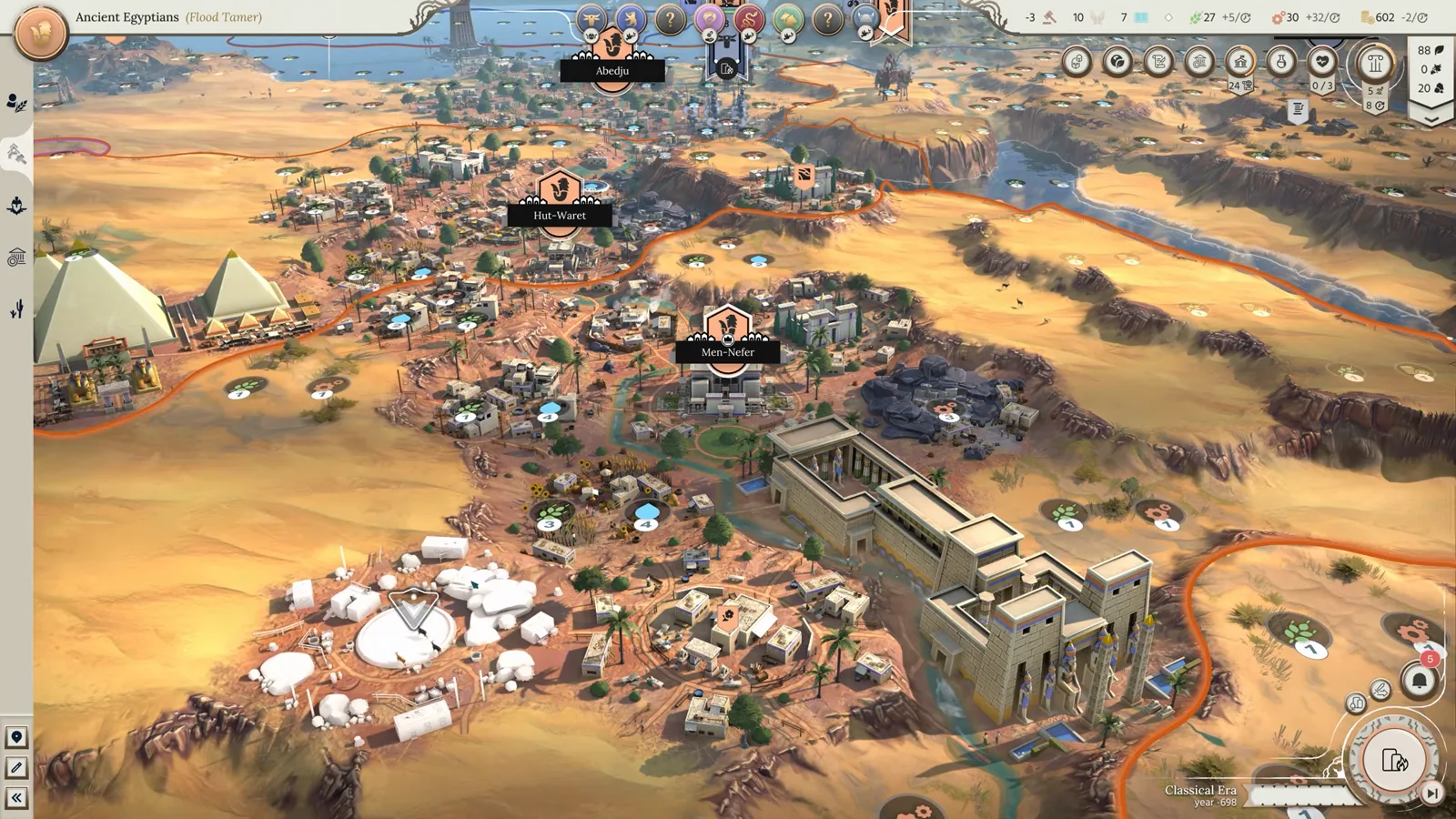
Why Amplitude Redesigned Culture Evolution in Humankind 2
In the original 2021 Humankind, advancing to a new era triggered an arcade-style race to grab whichever culture had the strongest meta yield—allowing players to morph overnight from the Ancient Egyptians into the Classical Maya, Medieval Vikings, and Early Modern Mughals without any geographic or historical continuity. While mechanically flexible, this “culture-hopping whiplash” made both your own empire and AI opponents feel like faceless color slots rather than living civilizations.
As revealed in the October 15, 2026 Gameplay Overview, Humankind 2 solves this problem through three interconnected systems:
- Cultural Progression Trees & Customs (deep internal mastery for every single culture).
- Cross-Cultural Borrowing (adopting specific Customs from neighbors via Foreign Contact).
- The Era Crossroads (optional, historically grounded culture transitions gated by Common History, Shared Land, or Foreign Contact).
How Cultural Progression Trees & Customs Work
Every one of the 70 Playable Cultures in Humankind 2 comes with its own dedicated Cultural Progression Tree. Instead of front-loading all of a civilization’s bonuses on the turn you select it, your empire generates Culture Points over time and spends them inside the Manage Customs menu.
Inside the Ancient Egyptians Progression Tree
During the official walkthrough, Narrative Director Jeff Spock demonstrated the Ancient Egyptians progression interface, which breaks down into sequential Customs nodes leading to a capstone Legacy Trait:
| Custom / Node Name | Node Category | Gameplay Role & Strategic Impact |
|---|---|---|
| River Transport | Tier 1 Custom | Enhances movement speed, trade connectivity, and logistics along river basins |
| Hieroglyphics | Tier 1–2 Custom | Unlocks monumental writing traditions, boosting science/influence and state administration |
| Priestly Class | Tier 2 Custom | Empowers religious districts, temple yields, and societal stability across Nile cities |
| Pharaoh’s Authority | Tier 3 Custom | Centralizes imperial rule, increasing capital productivity and state-level edicts |
| Viziers | Tier 3 Custom | Expands bureaucratic governance and regional governor efficiency |
| Egyptian Legacy Trait | Capstone Reward | Permanently etched into your empire’s identity once the Cultural Progression Tree is completed |
How to Borrow Neighbor Customs Without Switching Cultures
One of Humankind 2’s smartest innovations is separating cultural syncretism (learning from your neighbors) from full civilization replacement.
In real history, empires rarely erased their own language and identity just to copy a neighbor’s military technology or agricultural method—they adapted those practices into their own society. In Humankind 2, establishing diplomatic, trade, or border relations (Foreign Contact) with another civilization or independent people allows you to adopt specific Customs from their tree:
- Walkthrough Example — Thule Dogsled Hunters: In the October 15 showcase, an empire expanding toward sub-Arctic territories interacts with the Thule people of Greenland. Rather than abandoning their entire civilization to become the Thule, the player adopts the Dogsled Hunters Custom directly into their active roster—gaining specialized sled-dog reconnaissance and Arctic mobility while remaining Egyptians!
- Synergy with Biome Adaptations: Borrowed Customs work hand-in-hand with the 8 Biomes & Climate Adaptations system, letting you equip your empire for foreign terrain before launching an invasion or colonizing a new continent.
How the Era Crossroads & Transition Rules Work
When your civilization advances into a new historical era (across the game’s 6 Eras), you enter the Crossroads. Here, you face a meaningful strategic choice:

Option A: Stay Your Current Culture (Persistence)
You can choose to keep your existing civilization—for example, carrying the Ancient Egyptians forward into the Classical, Medieval, and later eras. Unlike Humankind 1’s barebones “Transcendence” button (which only gave a flat Fame multiplier), staying your culture in Humankind 2 lets you continue deepening your Customs roster, absorbing neighbor traditions, and building an unbroken historical dynasty.
Option B: Evolve Into a Connected Culture
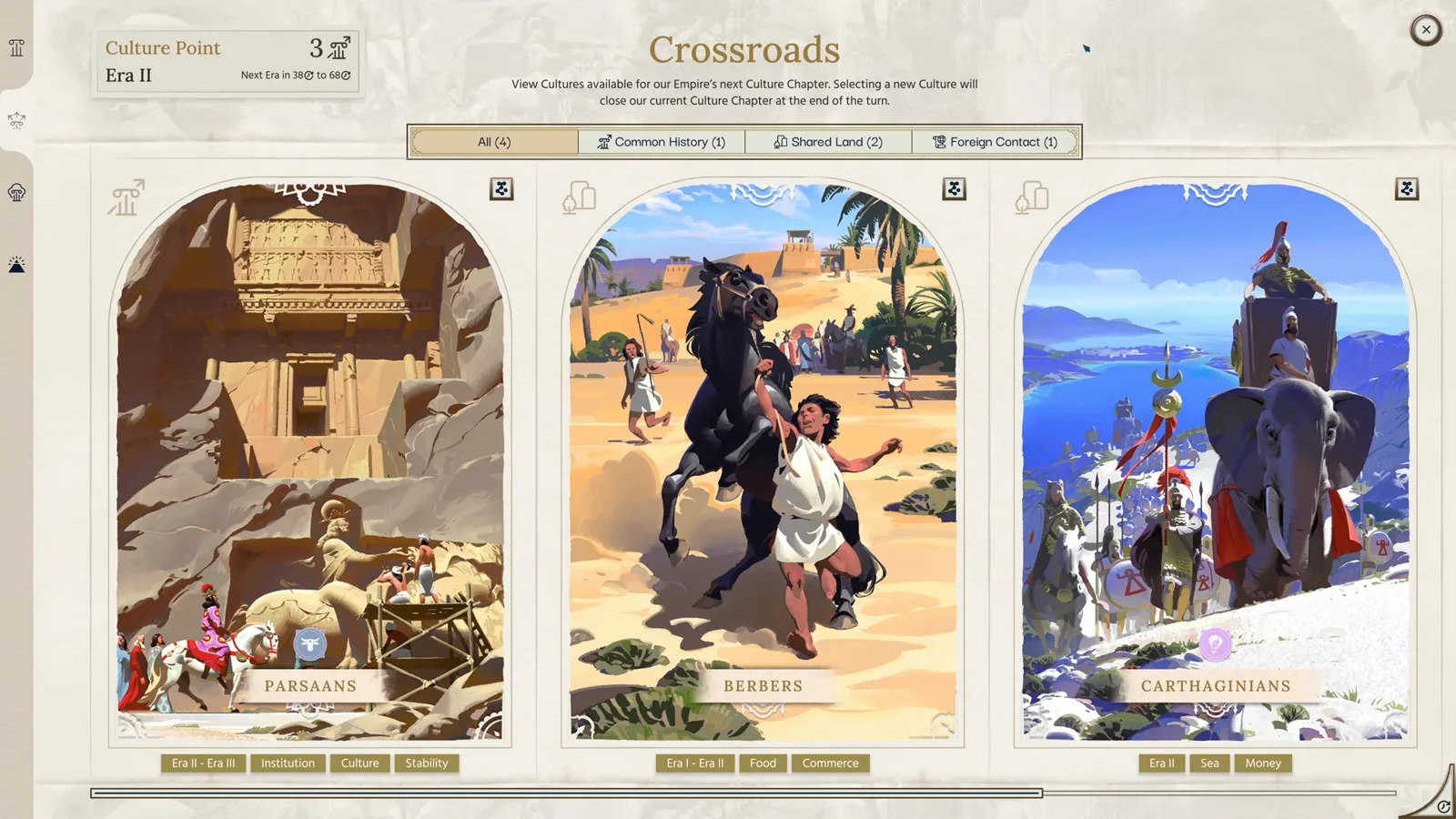
If you decide to transition into a new era’s culture, you cannot pick an arbitrary civilization from the opposite side of the planet with whom you have zero connection. Instead, available cultures at the Crossroads are unlocked through three historical links:
- Common History: Civilizations that share a direct historical, linguistic, or dynastic lineage with your current culture (e.g., Italic tribes evolving into Rome, or Eastern Mediterranean Greeks evolving into the Byzantines).
- Shared Land: Civilizations native to the geographic regions and Historical Mode territories your empire currently occupies (e.g., an Ancient Egyptian empire holding North Africa and the Levant unlocking the Carthaginians, Abbasids, or Parsaans).
- Foreign Contact: Civilizations you have actively encountered, traded with, or fought against during the preceding era, allowing cultural assimilation across borders.
To see how this system compares directly against Firaxis’s three-age civilization switching, read our Humankind 2 vs Civilization 7 Comparison.
Official Walkthrough Videos

Related Chronicles
cultures
Humankind 2 Cultures List: All 70 Civilizations & 6 Eras
Complete list of confirmed Humankind 2 cultures across all 6 historical eras, including Ancient Egyptians, Mycenaeans, Carthaginians, Rome, Abbasids, and Thule.
guides
Humankind 2 vs Civilization 7: Key Differences Compared
Compare Humankind 2 vs Sid Meier Civilization VII across 8 core 4X pillars: 6 Eras vs 3 Ages, 70 playable cultures, optional Crossroads, and Earth biomes.
mechanics
Humankind 2 Biomes, Climate Change & Adaptations Guide
Complete guide to all 8 Biomes in Humankind 2: Desert, Forest, Tundra, and Polar Adaptation Trees, perishable food logistics, and climate change survival.
Was this chronicle helpful?
Thanks for your feedback!